A windshield does far more than block wind and rain. It stabilizes the roof in a rollover, supports airbag deployment, and gives cameras and sensors a steady perch for advanced driver assistance. When I walk customers through a cracked-laminate cross section on the counter, they usually realize maintenance isn’t cosmetic at all. It’s safety and money. Care for the glass, and it will care for you, especially across Greensboro’s mix of sun-baked summers and salt-streaked winters.
This guide blends field-tested maintenance advice with local context across the 27408 area and nearby ZIP codes. Whether you’re skirting debris along Wendover, parking beneath oaks that shed sap near Irving Park, or commuting through construction zones, a few habits go a long way toward postponing replacement and keeping vision crisp.
What actually shortens windshield life
Three forces beat up auto glass long before the big crack appears: thermal stress, contamination, and mechanical impact. You feel mechanical impact when a stone snaps from a dump truck tire and you hear that sharp ping. The hairline crack that snakes across the passenger side two weeks later often comes from heat and vibration. Contamination is the silent killer, sealing in stress and staining the hydrophobic layer until wipers chatter.
Thermal stress in North Carolina shows up on spring mornings and mid-summer commutes. You crank the defroster to clear condensation, then park facing the afternoon sun. Rapid temperature swings make microscopic flaws expand. Laminated glass is tough, but it still moves. I’ve watched a chip hold for months, only to creep six inches after a scorching dashboard bake.
Contamination matters because your windshield isn’t just glass. From the factory, many modern windshields carry a durable coating. Over time, road film forms, wiper blades grind dust into arcs, and household glass cleaners leave ammonia residue that dries rubber and fogs plastic trim. Sap, bug proteins, and acidic bird droppings etch into the surface. Once that gunk hardens, wipers can’t track cleanly, which accelerates blade wear and turns every pass into sandpaper.
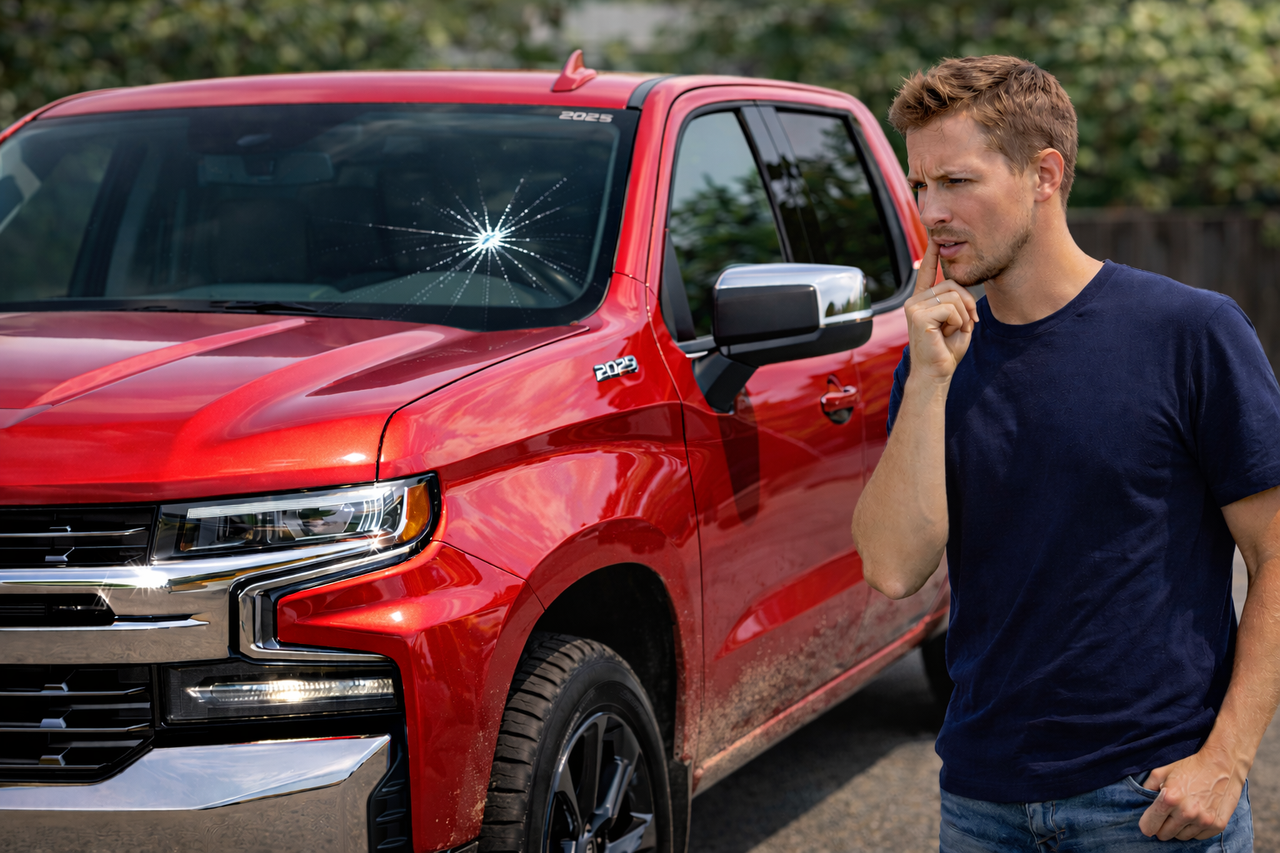
Mechanical impact is obvious, but people underestimate the ripple effect. Even a pinhead chip disturbs stress distribution. Left open to the elements, water intrudes, freezes, and spalls the glass at the edges of the break. The chip grows and the repair window closes.
The maintenance routine that pays for itself
I keep a simple maintenance cycle that fits real life. It doesn’t require specialty tools, just consistency and the right chemicals. The customers who follow it usually get an extra one to three years before needing 27408 Windshield Replacement, especially if they fix chips early and replace wiper blades on schedule.
Start with a weekly rinse. Greensboro pollen is no joke, and that yellow film can trap grit. A low-pressure hose clears the surface so you aren’t dragging abrasive dust with a towel. If you can, rinse before sunset. Let glass dry overnight and dew will glue new debris to it.
Wash monthly with a non-ammonia automotive glass cleaner or a pH-balanced car shampoo. The goal is to lift oily film that water alone won’t remove. Skip household blue sprays. Ammonia can haze tint and harden rubber. I’ve also seen it cloud aftermarket dash coverings and brittle the black ceramic frit that borders many windshields.
Every three months, decontaminate. A dedicated glass polish or a fine-grade clay bar designed for glass will shear off bonded contaminants that soap leaves behind. This single step stops wiper chatter in most cases. Work in the shade, keep the surface lubricated, and avoid aggressive abrasives unless you’re trained. Too much zeal creates optical distortion where ADAS cameras look through the glass.
Protect with a true glass sealant, not a silicone dressing. A quality sealant beads water at highway speed and makes bug removal easier. Reapply every eight to twelve weeks depending on driving and weather. If you park under trees around 27408 neighborhoods, shorten the interval. Watch for beads that flatten too quickly. That’s the cue to reapply.
Replace wiper blades every six to nine months, or at the first sign of chatter, streaking, or a thump at direction changes. Greensboro’s heat cycles demolish the best rubber. If your blades sweep over treated glass, you’ll usually get the long end of the interval, but don’t push it. A tired blade scours channels into the same arcs you stare through at night.
Finally, treat chips within days. A single repaired chip often costs far less than the insurance deductible on a full replacement, and many carriers in the 27408 area waive deductibles for rock chip repair. The best repairs happen within the first week, before dirt and windshield chip repair Greensboro moisture contaminate the break. Once the halo turns cloudy, resin bond strength drops.
Chip triage and repair timing
Not every chip is equal. I’ve repaired star breaks that looked ugly but held fine, and I’ve replaced glass with a “clean” bull’s-eye barely larger than a pea because the impact touched the PVB layer and left a ripple in the driver’s direct line of sight. The criterion I use lives at the intersection of safety, visibility, and structural risk.
If the damage sits within the primary viewing area, roughly the width of the steering wheel centered in front of the driver, I scrutinize it under polarized light. Any distortion that twists a straight line is a hazard at night. On cars with lane-keeping or automatic braking, a small ripple near the camera’s sweep is enough to recommend replacement, not repair. Calibration costs less when done right the first time. I’ve seen owners spend more on repeat calibrations than they would have on a qualified 27408 Windshield Replacement done once.
Edge chips deserve respect. Cracks often start within two inches of the perimeter. The bond between glass and urethane is part of your vehicle’s crash plan, and edge damage can telegraph through that joint. If you see a crescent chip near the black band, protect it from moisture and schedule evaluation quickly. Heat cycling spreads those cracks faster than center hits.
For the classic highway chip, a mobile technician can often meet you in the 27408 area the same day. If you commute through adjacent zip codes like 27401, 27403, or 27410, many shops cover that entire radius. A chip repair takes about 20 to 40 minutes. Good resin fills the void, restores optical clarity, and stabilizes the glass. Expect a faint scar if sunlight hits just right. The aim is strength first, appearance second.
Cleaning products that help rather than harm
I keep my kit simple. The fewer bottles, the better the routine sticks. When customers ask what to buy, I steer them away from household glass cleaners with ammonia, powdered abrasives, and multi-surface protectants that leave silicone film. That film smears at night and makes wipers squeal.
A stack of clean, dedicated microfiber towels is non-negotiable. Use a short-nap weave for glass to minimize lint. Wash them without fabric softener. Residual softener causes streaks. One towel to apply cleaner, a second towel to wipe, and a third dry towel for the final buff. If you’ve ever chased a foggy haze that only appears with oncoming headlights, chances are you used the same towel on paint, interior, and glass.
For the interior side, choose an alcohol-based, tint-safe glass cleaner and a fresh towel. You’re tackling plasticizers that off-gas from dashboards and cause that stubborn film that returns every summer. Work in overlapping passes, then flip the towel for a dry buff. Use a separate towel for the final pass along the edges near the A-pillars. That trim traps grime that creeps back after you think you’re done.
If you wear polarized sunglasses, expect certain laminated glass and heated elements to create faint patterns. That’s normal, not a defect. Don’t polish those areas aggressively chasing a phantom haze. You can make things worse.
Seasonal stress and how to blunt it
Greensboro weather swings teach lessons. A few habits make all the difference.
In winter, warm the cabin gradually. Start with a low fan and cooler temperature, then increase as the ice softens. Pouring hot water on an icy windshield shocks the laminate. You might get away with it once, then discover a foot-long crack after lunch. Use a plastic scraper if needed, and keep the edge clean. If you can, park facing east so morning sun helps.
After sleet, lift wiper blades before freezing nights so the rubber doesn’t weld to the glass. If they freeze, don’t pry with force. Let the defroster loosen the bond. I’ve replaced more than one windshield where a frustrated driver snapped a frozen blade and dragged a metal arm across the glass.
In summer, avoid blasting a 60-degree AC vent onto a 140-degree windshield. Aim vents toward the floor or side glass for the first minutes. Use a sunshade. They are cheap insurance. Over time, those shades also protect the black ceramic frit and the rearview sensor pack from baking.
Year-round, mind the car wash. High-pressure wands can drive water into edge chips. Touchless washes leave film, but the ones with rotating brushes can hold grit that scuffs. If you use a wash with brushes, rinse the windshield yourself first to cut down on abrasion. After the wash, run a microfiber towel across the wiper blades. They pick up grit from the wash just like the glass does.
Wiper blade choices and the myth of lifetime parts
For this climate, beam-style blades offer even pressure and less chatter as the arc shifts from dry to wet. A well-made rubber compound with a graphite or silicone treatment glides more quietly. I urge drivers to skip bargain-bin blades. A seven dollar blade that squeals and streaks for six months costs more in patience and glass wear than a twenty to thirty dollar blade that stays quiet and wipes clean.
If you drive mostly around 27408 and neighboring corridors like 27401 and 27410, a nine-month replacement cycle works. If you spend time on rural roads where dust and insects are constant companions, plan for six months. Never use dry blades to clear dust. Hit the washer or keep a spray bottle in the door pocket. Dry wiping is a shortcut that etches.
When replacement makes sense
A tidy repair has limits. If a crack reaches the edge, crosses your sight line with distortion, or intrudes on camera zones, replacement is usually the safer path. I’ve found that drivers wait because they dread cost and downtime, but modern mobile services can swap a windshield in your driveway in about ninety minutes, then perform ADAS calibration in a controlled setting or with mobile calibration where appropriate.
OEM glass keeps optical quality consistent and preserves the right wedge angle for heads-up displays, but there are excellent aftermarket options as well. On late-model vehicles with heated elements, acoustic laminate, or camera brackets, the cheapest glass often becomes the most expensive after misfits and recalibration do-overs. A reputable Auto Glass Shop near 27408 will explain the trade-offs. Don’t be shy about asking which vendor supplies the glass and how they handle recalibration. If your commute crosses into 27401 or 27403, the same questions apply when you search for 27401 Auto Glass or 27403 Windshield Replacement.
Resealing old urethane rarely solves leaks for long. Vehicles flex. The safest repair is a full remove-and-replace with new urethane. Water intrusion near the A-pillars or the dash can corrode connectors, short sensors, and mold the carpet underlay. If your windshield whistles at highway speed, ask for a water test with a smoke pencil. Small gaps hide well until a summer thunderstorm or a high-pressure car wash finds them.
How Greensboro roads influence glass care
Local road patterns matter. Construction near downtown corridors and along stretches of Bryan Boulevard kicks up gravel. Tailgating trucks is a direct ticket to chips. Keep a longer following distance when you see uncovered loads or fresh chip seal. On two-lane roads, stay out of the direct path of oncoming tires that sling stones from the centerline.
Tree-lined streets in 27408 show their own signature. Sap strings and caterpillar droppings etch if left for days. If you notice a stubborn dot pattern that resists normal cleaners, a dedicated glass polish usually clears it. Be patient. Short strokes, frequent towel flips, and light pressure prevent distortion.
Salt used lightly after winter events lingers in seams. Rinse the cowl area at the base of the windshield, where leaves and grit collect. A clogged cowl drains poorly, soaking the cabin filter and fogging the interior glass more quickly. If your defroster feels weak, inspect that area before you assume a heater core problem. Clear drains fix more fog complaints than people realize.
Insurance, quotes, and why the details matter
Many insurers in the region treat rock chip repair as a no-deductible claim. It saves them from later paying for full replacement. If you’re unsure, call your carrier before the crack grows. If you need pricing, an auto glass quote 27408 from a local shop usually asks for your VIN, camera package, and whether you have rain sensors or heated wipers. Those features change the glass part number and the calibration procedure.
Shops serving nearby codes can provide estimates, too. If you work or live across town, asking for an auto glass quote 27401, auto glass quote 27403, or auto glass quote 27410 gives you a baseline. In my experience, honest quotes will spell out glass type, moldings, urethane brand, mobile service fees if any, and calibration method. If you see a single vague price without line items, request detail. It prevents haggling later.
Calibration is more than a buzzword. Lane-keeping and automatic emergency braking rely on a camera behind the windshield. After replacement, the camera must be realigned. Static calibration uses targets at precise distances and angles. Dynamic calibration involves driving a set route under defined conditions. Some vehicles require both. A qualified Auto Glass Shop near 27408 or Auto Glass Shop near 27410 will either have the equipment in-house or partner with a calibration specialist.
DIY repairs: when to try and when to pass
Over-the-counter chip kits can stabilize small bull’s-eyes and save a drive across town, especially if you catch the damage within 48 hours. If the break shows legs longer than a quarter inch, touches the edge, or sits in the wiper sweep on the driver’s side, let a professional with vacuum and pressure equipment handle it. The nuance is in removing air and moisture, not in the resin itself.
Avoid drilling unless you truly know what you’re doing. One wrong angle with a hobby bit creates a white crater that permanently distorts the view. Also avoid repairs in direct sun. Heat flashes resin before it can flow and cure properly, leaving bubbles that become weak points. If you’re in a pinch, clean the area gently and cover the chip with clear packing tape to keep out moisture until a technician can take a look.
Two quick checklists you can keep in the glovebox
- Weekly: quick rinse to remove pollen and dust, wipe wiper blades with a damp microfiber Monthly: clean inside and out with a tint-safe, non-ammonia glass cleaner Quarterly: clay or polish the glass lightly, then apply a glass sealant Every 6–9 months: install new wiper blades, inspect for chips and address within days Seasonal: use a sunshade in summer, warm glass gradually in winter, clear the cowl drains Ask before booking: what glass brand will be used, OEM or equivalent Confirm: urethane brand and cure time, safe drive-away time Verify: ADAS calibration method, included or billed separately Request: a written warranty on workmanship and water leaks Provide: VIN and features like rain sensors, heated wipers, or HUD for accurate parts
Working across neighborhoods and zip codes
Most reputable providers cover a wide swath of Greensboro and surrounding areas. If you move between 27408 and adjacent zones for work or school, keep an eye on coverage. A shop that regularly handles 27401 Auto Glass and 27401 Windshield Replacement will already know the traffic pinch points where chips happen, just as shops serving 27403, 27405, or 27410 learn the local patterns for sap, construction grit, and seasonal debris. If you need a quick response near campus or downtown, search terms like Auto Glass Shop near 27401 or Auto Glass Shop near 27403 help you narrow travel time. If home is Irving Park but you work near Friendly, an auto glass quote 27410 alongside an auto glass quote 27408 gives you an apples-to-apples comparison.
That same logic extends farther: drivers commuting from 27407 or 27409 industrial corridors, or swinging through 27411 and 27412 during semester peaks, benefit from shops that serve multiple ZIPs with consistent quality. If family or co-workers ask, the structure is the same for 27402 Auto Glass, 27402 Windshield Replacement, or Auto Glass Shop near 27402, and likewise for 27404, 27406, 27415, 27416, 27417, 27419, 27420, 27425, 27427, 27429, 27435, 27438, 27455, 27495, 27497, 27498, and 27499. Use those zip-specific searches to find a team that can meet you where you are, then apply the same maintenance playbook to stretch the life of the new or repaired glass.
Small habits that save big money
One fleet customer who runs delivery vans through 27408, 27401, and 27410 cut glass costs by nearly a third with three policy changes. Drivers now keep a pump sprayer with distilled water to wet glass before wiping road film, they place folding sunshades in afternoon lots, and they radio in chips immediately so dispatch can route a mobile repair. Their maintenance manager tracked replacements per 100,000 miles and watched the line drop. Private owners can mirror that approach on a smaller scale.
Teach yourself to scan the glass at fuel stops. Look low in corner areas where wiper arcs don’t polish, and high near the mirror where chips hide behind tint strips. Carry a strip of clear tape and a business card for temporary protection. Aim vent air away from glass for the first minute on hot days. Empty the cowl of leaves after storms. None of this is glamorous. All of it works.
The value of optical quality
One last point that gets overlooked. At night or in rain, the difference between clean, well-sealed glass and a neglected, filmed windshield is the difference between reacting in time and guessing. Optical clarity reduces eye strain. It shortens the mental lag that creeps in over a long drive. Lane markings reflect more crisply. Oncoming headlight glare blooms less. I’ve driven the same stretch of Lawndale with a freshly polished windshield and with a neglected one. The clean glass makes the road feel slower at the same speed, simply because the brain has cleaner input.
That matters for ADAS, too. Cameras see what you see, except they don’t squint. Their algorithms rely on consistent contrast and straight edges. A pitted, contaminated, or distorted windshield forces the system to work harder. One automaker’s service bulletin captured it plainly: reduced camera confidence leads to unnecessary disengagement. That translates to real-world frustration when lane-keeping refuses to stay active on a misty night.
Bringing it together
A windshield is a structural component, a sensor window, and a daily interface. It rewards simple, steady care. Rinse away grit before wiping. Use the right cleaner and fresh towels. Polish and seal quarterly. Replace wipers on a schedule. Fix chips fast. Warm and cool the glass gradually. Clear the cowl drains. When replacement becomes the wise move, work with a shop that understands calibration and stands behind its urethane line.
If you live or work around 27408, the same habits hold in neighboring zones like 27401, 27403, and 27410 where driving patterns shift but physics doesn’t. Ask for a precise auto glass quote 27408 when damage demands it, compare with quotes nearby if convenient, and choose the team that explains the why as clearly as the what. Take care of the glass, and it will quietly add years of clarity, comfort, and safety to every mile you drive.